
What’s happening in the rooms, libraries and homes we visit, plus the occasional STEAM idea to try at your own kitchen table. For the weekly challenges, follow us on Facebook.
Term 3 2026 marks a year since the first INNOVATEclub session. What started as one educator, one kindergarten room and a box of materials is now a program running in centres from Brisbane to Far North Queensland.
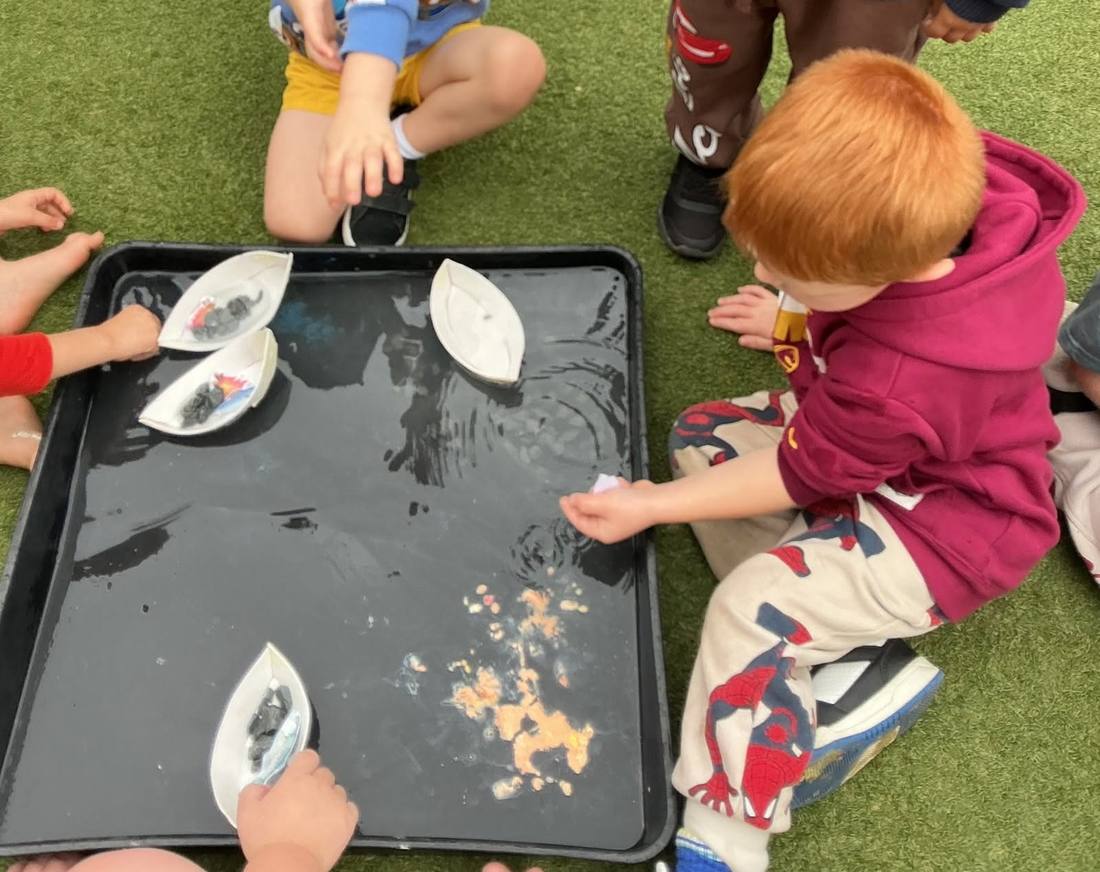
A year ago we walked into our first kindergarten room with a story, a tray of materials and a question. Twelve months later, INNOVATEclub has run four full terms, travelled around the world (Term 3) and across Country (Term 2), and we have watched hundreds of four and five year olds build bridges, test boats, mix colours and argue, politely, about why the tower fell down.
What has surprised us most is the educators. Every term, the teachers in the room pick up the provocations and keep going long after we have packed up. That was always the point: STEAM thinking is not a visitor, it is a habit. Thank you to every centre that trusted us with a term of their children’s time. Here is to year two.

Aboriginal and Torres Strait Islander Science Day falls on the Tuesday of National Science Week, and it is a date that means a great deal to how we design our Term 2 program.
Founded by DeadlyScience, the day recognises more than 65,000 years of observing, experimenting, innovating and caring for Country. Young children are natural scientists: they watch, wonder, test and ask why all day long. First Nations peoples have been doing exactly that on this continent for tens of thousands of years, from reading the night sky to managing land with fire.
Our Term 2 theme, Our Country, Our Culture, Our STEAM, is built around that idea. Every investigation starts with Country: the animals, the weather, the plants and the knowledge that was here long before the word “science” arrived. We develop that content alongside a First Nations cultural partner, and we review it every year so it stays respectful and current.

Junior engineers aged 4 to 8 built balloon cars, rubber band vehicles, bottle cars and magnetic peg cars, then raced them down custom-textured ramps at libraries across the City of Moreton Bay.
Ramp & Roll is a four-part series we designed for council libraries: free for families, paid for by council, and built so that it is not something a library team could run from a worksheet. Each session explores angles and slopes (how incline changes speed), friction and surfaces (does a rough ramp slow a car down?) and the habit at the heart of all of it: make a prediction, test it, and change your design.
Thank you to the City of Moreton Bay library teams for hosting us, and to the two hundred-odd children who proved that a rubber band and a bottle cap can hold a room’s attention for a full hour. If you are a library or council team, our INNOVATElab booklet has this and nine more workshops ready to book.

We set up a free STEAM table at the Milton Markets and spent the day learning through play with Brisbane families. The crowd favourite, by a long way, was elephant toothpaste.
Big reactions, big smiles and a lot of “wow” moments. Children mixed, measured and watched foam climb out of the bottle, then went straight back to the start of the line to do it again. Days like this are where INNOVATEday came from: families kept asking whether we could bring the same thing to a birthday party or a playgroup, and the answer is yes.
Thank you to every family who stopped by. If you missed us, keep an eye on this page for the next community day.
A favourite for a reason. One bag of milk, sugar and vanilla, one bigger bag of ice and salt, five minutes of shaking, and a bowl of ice cream that teaches freezing point depression without anyone noticing.
You need: a small zip-lock bag, a large zip-lock bag, half a cup of milk, a tablespoon of sugar, a few drops of vanilla, a few cups of ice and about a third of a cup of salt. Put the milk, sugar and vanilla in the small bag and seal it well. Put the ice and salt in the large bag, tuck the small bag inside, seal, and shake (gloves or a tea towel help) for five to eight minutes.
The science: salt lowers the temperature at which ice melts, so the ice around the bag gets colder than plain ice would, cold enough to freeze the milk. Ask your child why the outside bag feels colder than the freezer, and what might happen with more salt. Then eat the evidence.